




Leather is likely the most intimidating part for most people, its expensive and theres so many different types. For a beginner I recommend a pack of leather scraps, this way you don't have to fully commit to a big expensive piece and you can have a variety of shapes, textures and colors.
Premium Leather Remnants by ArtMinds™ is what I used to start, its only $9 USD and even if the leather is varying in quality and unlabeled, this does work as a way to start because you can try it out with different kinds this way. If you wanted to try an option thats a little more expensive but from a reliable brand Assorted Leather Remnant Bag from Weaver Leather is also a good option for $12 USD. I also recommend researching leather itself as you start so you can learn the different types, weights, tempers, etc, because not all leathers are created equal.
Projects
 Mini Black Genuine Leather Spiked Keychain [SOLD]
 0.75 Inch Spiked Keychain [SOLD]
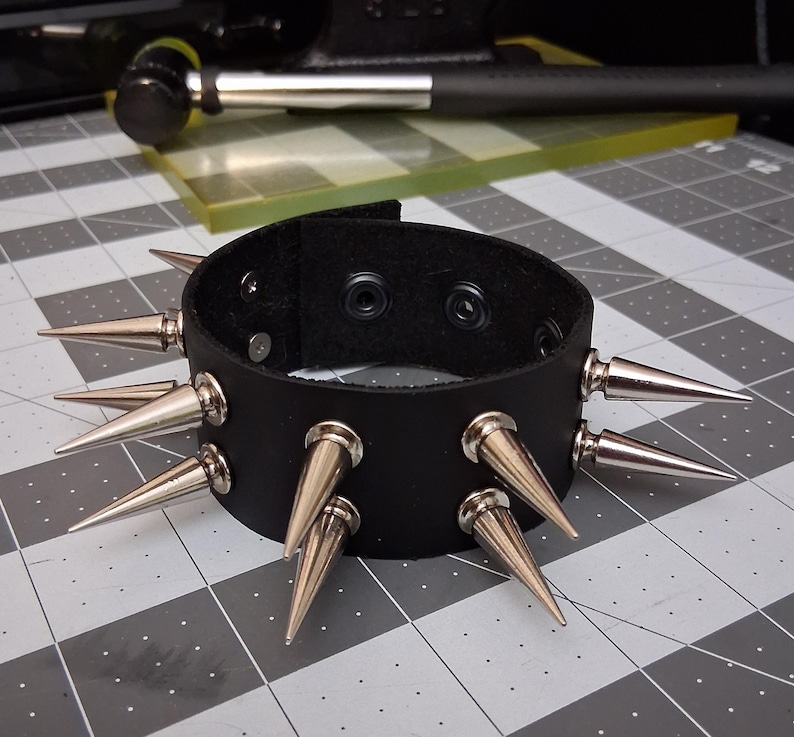 1 Inch Double Row Spiked Bracelet
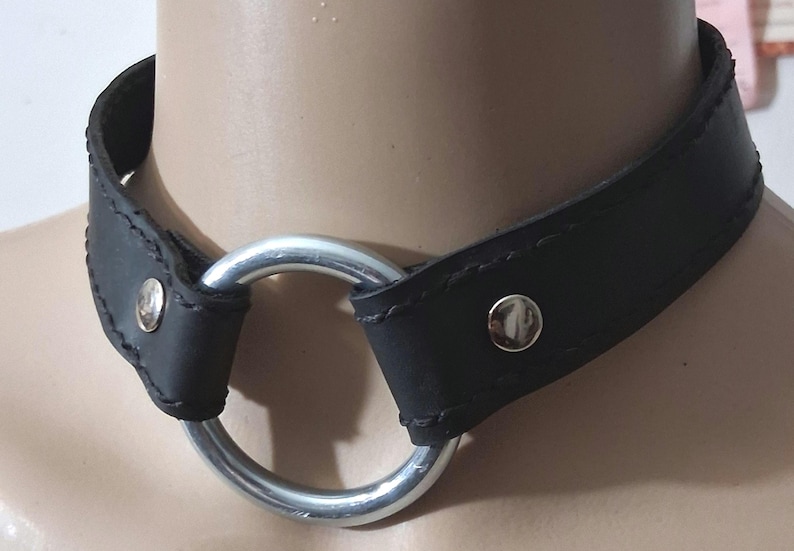 O-Ring Choker/Collar
 Spiked Bracelet w/ Purple Stitching [SOLD]
Leathercraft, Leather kink, Leather history
Leathercraft has been around for a lot longer than some would think, the first evidence of scraping animal skin for tanning was found to be from about 400,000 years ago with stone tools. {source: rivercityleather.com}
From cavemen to cowboys, to bikers to rockstars, to sexual dominants, we associate leather with many things, ultimately at its very basics, leather is animal skin. Most leather as we think of it is from cow but leather can realistically come from just about any animal with fur or scales.

Leathercraft as we know it is a hobby in which one makes things from leather, historically it was less of a hobby and more of a means of survival. There were times in history in which animal skins/hides were used as clothing or shelter to keep protected from the elements. There have been leather articles and tools found all over the world from various time periods, native americans, egyptians, ancient greek and rome, along with many other cultures have been found to have used leathercrafting techniques and tools that we still use even today.
How I Started With Leather
I honestly don't know how to describe my start. I'd say I started doing leather stuff around mid 2025 and I really did just start it as an impulse. I saw what other people have made, I saw leather items I owned and thought "this can't be too different from making stuff with fabric yeah ?? I wanna try". So I researched and yeah, it is similar to fabric in terms of techniques but there are definitely some specialized tools and methods to leathercraft.
At first I was intimidated as anyone would be, it looked kinda like, a lot. Theres weird tools and everything seems expensive and it just felt overwhelming to me. For a sec I actually thought I would never be able to really pursue it, I just thought I'd ignore it or something and find another hobby like I always do but then one day, me and my partner were at Michaels craft store and I saw leatherwork tools there. I got excited because I didn't know they had that stuff, I got the chance to look at the tools up close and see what it was like. I ended up buying a stupid lil kit and a bag of leather scraps along with some rivets and snaps and probably some other stuff I can't remember right now. I used those to make my first real leather thing, I made a little spiked bracelet with red leather and rivets and a snap closure. I still have that and I honestly just clip it to my bag now, its sentimental for me but I don't wear it for a reason I will elaborate on below.
The reason I don't wear my first ever leather creation even though its really special to me, THE SHIT I USED WAS FROM MICHAELS. Some of the supplies from Michaels was just really poor quality, the rivets rusted and left lil spots on my skin, the awl I was using ended up getting dull, the stitch chisles are too dull to even puncture the leather, the case the lil starter kit came in was made of flimsy plastic that ended up breaking and the stitch marker wheel is really dull and doesnt leave a great impression. I have since gotten better supplies, I know more now at least but it was frustrating to try and use low quality tools. If you plan to get into leatherwork, use the items I suggest, don't buy the lil kit [recommendations coming soon]. I have websites I like to the right on this page so if you wanted to buy some things to start or wanted to get a feel of things, those sites are a good start.
Frustration aside, as I started to get into leather more and more, learning new ways to do things, researching techniques and tools, I just grew more and more fascinated and excited by the opportunities, I also started selling my leather items and people seem to really like them! I've sold a lot of things and I've gotten compliments on items I've made, its been a very trial and error experience for me but its also been a very fun and fulfilling one.
Starter Recommendations
These are items I feel are important for beginners to start off with
Theres a few non-leather specific tools you should probably have when you start out but depending on what you plan to do, some of them you may not need as much. You can evaluate what you need based on what you want to make
These tools I consider a necessity:
These tools I consider a necessity:
Ruler
I specifically usethis one from Westcott for $3.56 USD but if you have a plastic one or one from the dollar store, youll be fine to use that too I'd imagine. I highly recommend a metal one for sturdiness and or one with a corked backing because its less likely to slip while you use it. I personally make items with larger pieces so I use the 18 inch version but if you find one you like thats 12 inch, that isnt necessarily a problem.Knife
There are so many kinds of knives you can use, I've seen people online recommend many kinds but you really don't need anything fancy. Some people use a box cutter like this, I have one of them but I personally think my favorite is a rotary cutter similar to this one, typically these are meant for fabric so if you do use one meant for fabric, you may need to press a bit harder because leather is thicker. If you have or want to try a precision craft knife, like an x-acto knife, you probably could use that but I personally would recommend a knife like that for smaller projects or precision exclusively, I don't use mine much.Cutting mat
This is sooooo important I cannot stress it enough, get a surface you don't mind cutting on. If you already have like, a board or something you don't mind leaving cuts and scratches on then you can use that but I personally use a cutting board meant for fabric similar to this one. Just make sure not to get a tiny one, you need to make sure it fits your space and can fit for the leather you use.Small screwdrivers
This one is a bit touch and go, theres definitely circumstances where you may not need this but I feel the need to add it because I use mine a lot. Often times when adding things to leather, they either need to be hammered or screwed into the leather so it may be good to have a small screwdriver similar to these on hand if possible. For me, I use spikes in my projects and often the spikes I've got will come with a little screwdriver meant for them so if you plan to do that, maybe check to see if it comes with one just in case.Rubber mallet
NO METAL HAMMERS I'm telling you, you need a rubber mallet specifically, when you fasten something into leather or use a stamp, you often start off with a mallet to do that. Theres tools and machines that can help so you don't have to hammer it but for the sake of simplicity I recommend starting with a mallet. I specified a rubber mallet and no metal hammers because the tools used (mini anvils, hole punches, rivet setters, stamps, etc.) are made of metal and if you use a metal hammer on your metal tools, it'll eventually damage them. I use one similar to this here because its small and meant for making jewelry usually. You can get a big gigantic mallet if you really wanted but I dont recommend it, I have this one and I don't really use it because its huge and clunky for my purposes.Binder Clips
I use these fuckers all the time, I know a lot of people who use them too, they help to hold pieces in place when stitching or gluing, I've used mine to clip and store my leather, I think these are really versatile. I have a lot of them that I've just accumulated over time but a generic pack like these is perfectly fine. I do recommend having different sizes at your disposal but I wouldn't call it a dire need. Some leather folks also use leather covers like these with their binder clips to ease pressure and not leave marks in the leather. If you really wanted to do that, I would recommend making them as a small first project if you can because they're simple enough and are useful.These are the weirder tools, ones that are leather centric that you likely won't have any other application for outside of leather.
Awl
An awl is a tool meant for marking a surface or puncturing a small hole, I use mine to scratch shapes onto my leather before cutting it. For leather there are different kinds of awls but I recommend one similar to this as a start. When looking for an awl, you will find millions of results for different kinds and I am gonna tell you, you don't need a stitching/sewing awl, you don't need one that costs more than $10 USD, its a tool to scratch the surface lightly to mark things out and to potentially poke lil tiny holes but theres also other tools that you can use to poke holes, you may just need to evaluate based on what you plan to do.Hole punch
At first I didnt have a hole punch and I deeply regret not getting one sooner. I make items that require holes for buckles, holes for spikes and rivets to go through, that sorta thing and I often need holes punched into my leather. There are hole punches like these that you use a mallet to hammer it into the leather and whatnot, those are fine but I live in an apartment and have neighbors so I try not to be loud if I can help it and to combat the sound of hammering away, I bought this rotary punch instead and I use it constantly, I highly recommend a rotary punch.Rubber punch pad + marble slab/anvil
These are paired together for a reason, you need them both. I use this marble slab with this kind of punch pad together. I stress about using both because the marble is to protect your workspace as you hammer on the surface, the punch pad is to protect your tools as you hammer them into the leather. If you use stitch chisles or stamps without a punch pad, the tools will become dull, if you use a punch pad without a marble slab or something similar enough underneath, the surface under you will be taking each impact from your hammer and you could break your surface or damage your tools. Not to mention, the marble slab helps everything to be way more quiet. You can use an anvil in place of a marble slab but I recommend the marble most, if buying a piece online seems like a lot, you might be able to buy one from a countertop business, if you have marble countertops you could work there too, I've seen folks visit hardware places and countertop makers who have given them a scrap piece of marble for free, I would ask around if you can.Not everyone stitches from the beginning but if you plan to, you'll need these.
Stitching chisles
I use these all the time, you use them with a mallet and a rubber tooling mat to add stitching holes to your projects. I got this set as a gift and they work real nice for me.Waxed thread
Waxed thread specifically is the universal thread of choice for leather because its sturdy, looks nice and is easy to work with. You can get like a billion different colors but I recommend starting with black or brown, thats how I started off. I feel for some projects if you wanted to you could potentially use embroidery thread but I don't really recommend that. I haven't used this one myself personally but I have seen other people use it an they like it, its only $2.99 USD for a 25 yard spool so its a good way to start off. As a gift i got a pack very similar to this one and I've been using that, it works for me and theres like a bajillion colors which is nice.Needles
Leather needles are different from sewing needles, they're usually bigger and sharper. I use a set similar to this because it comes with a lot of sizes and sometimes i feel I benefit from longer or shorter depending on the project. You might be able to get by with an embroidery set or doll maker set of needles if youre really in a pinch but I do suggest ones meant for leather above all.Thimble
While some can get by without a thimble, I do recommend one if you're a lil clumsy, I've given myself bad punctures in my fingers because I didn't use a thimble so I do recommend that for safety. I have one that I think is this one but I honestly don't know, the one I use I just accumulated I guess. Sometimes the needles do come with a thimble as well so if you buy a pack of needles you can always check if it comes with one.Depending on what you plan to do, you may not need some of the things here. I have the items I use most listed here
Glue
I recommend glue to start but if you're stitching primarily, you can get by without it to a degree. Many people do recommend using glue with stitches though, they say to glue then punch holes and then stitch things but personally I don't always do that. For a while I was using this glue by Fiebings but I later learned I just prefer gorilla glue branded wood glue because I was using a piece of wood with one of my projects so I tested it out and just found that I liked it more. Everyone prefers different glue for it, I've seen some use E-6000 which I tried and didnt like because it dried gooped up and hard, I've seen some use multipurpose glue, I've seen people do it different ways, I feel it may depend on personal preferences but I like my wood glue.Leather balm/conditioner/lotion
Not exactly a necessity but it is good to start for learning purposes and to take care of your pieces. Leather balm is a goop you apply to the leather to nourish it, since leather is skin it does need extra care sometimes and using leather balm is a good way to condition, protect and restore leather. Leather conditioner and lotion pretty much do the same thing, generally they are all different names for a similar concept but the main difference is what oils and ingredients everything uses. Some leather balm is dyed so it can restore the color of your pieces too, thats usually used on items you're repairing like a worn out couch or something. I usually just usethis uncolored one, its advertised for work boots but its just a typical leather balm. Some folks use mink oil or other products of the sort but from what I've seen and tested, they're really just all the same shit and you can do what you want as long as you follow the instructions.Leather Dye
Leather dye can be useful for certain effects if you want to try it but it really isn't a huge deal, if you intend to make anything with vegetable tanned leather where you want to dye it later, yeah maybe get that but otherwise youll be okay without it in the beginning. I use this black dye to add a weathered sorta effect to some of my items and I do plan to get other colors to experiment with. To apply it I use a lil sponge applicator similar to these but ive also seen people use these dauber things. Lil fun tip, for my weathered effects I usually rip a bit off the edge of the sponge brush before I use it because it makes an uneven and rugged lil pattern.Leather Paint
Admittedly I have not used leather paint, if you plan to make things like painted bags and garments that involve leather paint I would recommend this one because I've seen creators online who like them and they have other products that I have used and liked.Hardware are the metal or plastic bits n pieces on leather items. You may not need all of these in the beginning but the ones here are common and used over a widespan of projects. I personally use hardware for my pieces all the time.
Rivets
Rivets are the little metal things that are either decorative or used to join pieces of leather together, they can be an alternative to stitching sometimes and there are a billion different kinds of rivets including metal, color, shape, and application, you can browse some of them through tandy here or through weaver here. A standard, typical rivet is usually the double capped rivet or a single capped/rapid rivet with a flat backed post, I recommend getting a few different sizes likethis rapid rivet set so you can experiment with sizes and color. With capped rivets, its imperative that you have a rivet setter tool. Usually a rivet setter is just a metal rod and mini anvil that you use with a mallet, the anvil and the rivet setter are curved special for the rivets which is why they're so important. This set comes with a rivet setting tool and mini anvil, sometimes they do that so you won't need to buy it separately so be sure to check that first. Another thing with rivets, when using those in your leather, you need to puncture a hole where you want it to go and also make sure you dont have a rivet with a post too big for your piece, if it is that can be trimmed with flush cutters but its better to use the right size if anything. There are tutorials online for using rivets, I recommend finding one if this sounds confusing to you. If rivets sounds like a bit too much to you, below is an alternative.Chicago Screws
Chicago screws are like a rivet cheatcode, they're rivets with screw on backs pretty much. These are a very popular alternative to rivets but the cons are that you have to heavily focus on the size of the screw so you don't use one that doesnt fit, they often aren't in variety packs, they're usually more expensive than rivets and some people don't like the screw on backing to be visible if they can help it. these come in a few different sizes and colors and you can get a smaller pack for cheaper if you just wanted to try them out, weaver has a selection of different ones through weaver here if you just wanna see what thats like.Eyelets/grommets
Eyelets and grommets are those little metal circles to reinforce holes, they're the things on shoes that your laces go through or they can be used in other ways like on alternative fashion. An eyelet vs a grommet isn't a huge difference, its just that an eyelet has one segment while a grommet has two. I have a belt that has grommets in it all the way around similar to this and I've seen that style as a popular choice in alt fashion, especially the early 2000s scene/emo circles. I personally have used grommets but not eyelets so rather than try an speak on these myself, i'll let weaver do the talking. Eyelets and grommets come in different sizes, applications and colors just like rivets do so you can find all kinds of them to match whatever you make, heres weavers selection on eyelets and grommets but keep in mind that for both of them you do need a tool just like you do with rivets so make sure that you have that before you try and start anything.Wishlist
Leather Lace Maker
[Weaver Leather Supply]A tool to make leather lace from a sheet of leather.
Tokonole
[Weaver Leather Supply]Tokonole is a burnishing agent used to finish off edges on leather items, its an essential for most leathercrafters.
Panic Clasps
[Weaver Leather Supply]A type of clasp that can open in an emergency with force, I hope to make pet collars with these.
Swivel Scissor Snaps
[Weaver Leather Supply]A clasp that has a swivel and is easy to open and close. I hope to replace the clasps I'm currently using with something like these, they seem more sturdy and I like the colors they come in.
Sites I like
These are websites I like to browse and order supplies from
Buckleguy
Buckleguy sells a huge variety of leather stuff but they also manufacture a lot of the hardware they sell which makes the prices lower in comaprison to other sites, it also means they can sell stuff in singles like one jumpring or the separate pieces of a snap closure independently, so if you find yourself needing one rivet cap for whatever reason, you can get that here, You can also have custom hardware made which I don't think I've seen anywhere else do.
Tandy Leather
Tandy is a leather store that also has physical locations all over the world, you can go there and buy leather supplies or take classes. Their website sells typical leather, hardware, tools and all of the usual leather stuff you would expect but they also have sales like all the time, they tend to have a lot of holiday sales. I've never been to a Tandy but there is a location an hour away from me with good reviews, when I have the time I plan to go.
Weaver Leather Supply
Weaver is a typical leather supply store but they have a lot of unique items such as the Tattooling machine, unique hardware and a big selection of clearances. Another thing Weaver has that I like, they have rewards points that you can earn with every purchase, you can use them to get money off your next purchases, I have enough so far to get ten dollars off my next purchase ! Weaver also branches off into a few other brands as you can see here if any of those interest you, a lotta sport and horse and dog supplies I think
Wawak
Wawak supplies sewing and upolstry items but I still find myself looking here for things I can use for leathercraft like buckles and clasps, they sell them in bulk for a pretty good price. They have a lotta stuff for people who sew, make garments, upolstry, they have supplies for crochet, specific things like special zippers, bra clasps, bra foam, corset boning, they have like everything of that nature.